
The Evolution of Machine Learning
Machine learning has emerged as a pivotal force in the transformation of technology, influencing how we interact with data and experience services. This advanced field of artificial intelligence allows machines to derive insights and make informed decisions, often with remarkable precision. In recent years, it has found invaluable applications in everything from healthcare to finance, fundamentally altering the landscape of modern industry.
At the heart of machine learning lie two primary paradigms: supervised learning and unsupervised learning. Each serves distinct functions and is characterized by unique methodologies and applications.
Supervised Learning
In supervised learning, algorithms are trained on labeled datasets, which consist of input-output pairs. Each input is paired with a corresponding output that the model attempts to predict. This approach has driven significant advancements in various fields. For example, in the realm of healthcare, algorithms can analyze medical images to detect conditions like tumors by referencing thousands of previously labeled scans. This method not only increases diagnostic accuracy but also assists physicians in making faster, evidence-based decisions.
Another prevalent use case is in financial services, where banks utilize supervised learning models to predict credit scores. By analyzing historical data on borrowers who have either paid their loans or defaulted, these models can inform lending practices, ultimately mitigating financial risk.
Unsupervised Learning
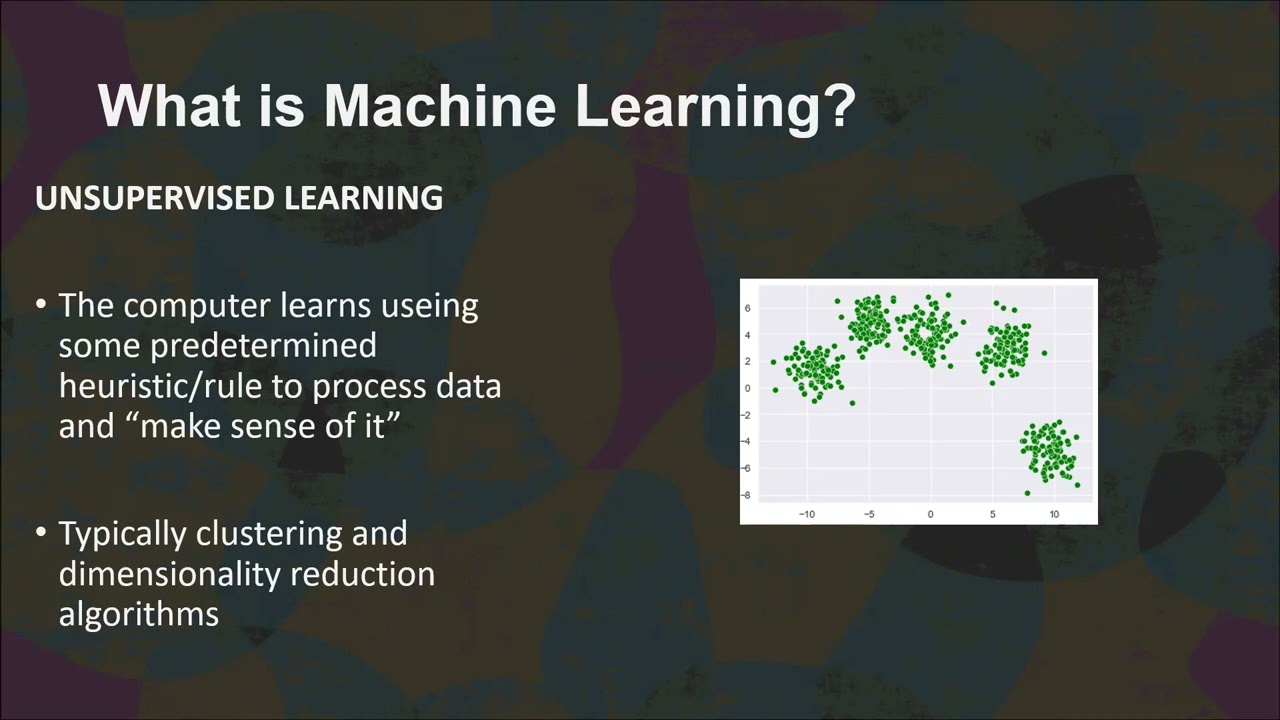
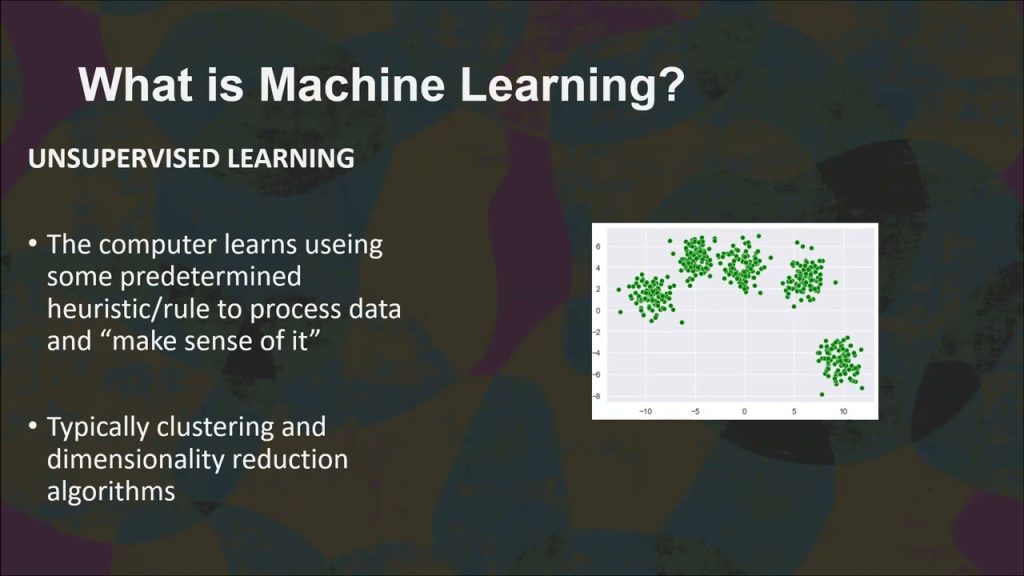
Conversely, unsupervised learning operates on unlabeled data, where the machine seeks to identify natural patterns and structures without pre-existing guidance. This paradigm is particularly useful in customer segmentation. Businesses can analyze purchasing behavior to group customers based on similarities, tailoring marketing strategies to distinct segments for increased efficiency.
Additionally, unsupervised learning plays a critical role in anomaly detection within cybersecurity. Algorithms can be designed to identify unusual patterns of behavior, signaling potential threats such as fraud or data breaches. This proactive approach enhances the security frameworks of organizations, particularly as digital threats continue to evolve.
The transition from supervised to unsupervised learning reflects a broader movement towards leveraging machine learning in creative and innovative ways. As developers and researchers continue to push the boundaries of what these techniques can accomplish, it is imperative for businesses and individuals alike to stay informed about ongoing developments.
Machine learning is evolving rapidly, with each breakthrough bringing us closer to realizing its full potential. By delving into its history and assessing key advancements, we gain valuable perspective on how far we’ve come and can glean insights into what the future opportunities in this vibrant field might hold.
DISCOVER MORE: Click here to dive into future trends
Breaking Down Supervised Learning
The origins of machine learning trace back to supervised learning techniques, which have paved the way for innovations across numerous sectors. Supervised learning can be likened to a guided exercise where the algorithm learns from examples, enhancing capabilities through exposure to data that has already been classified. This model is fundamentally akin to a student learning from a teacher, where the teacher provides feedback on the student’s performance.
Among the most common algorithms used in supervised learning are:
- Linear Regression: Often employed for predicting continuous outcomes, such as housing prices based on various features like size and location.
- Logistic Regression: This is used for binary classification tasks, such as determining whether an email is spam or not.
- Decision Trees: A versatile algorithm that models decisions and their possible consequences, frequently used for both classification and regression tasks.
- Support Vector Machines: Known for its effectiveness in high-dimensional spaces, making it suitable for complex classification tasks.
- Neural Networks: A more sophisticated method mimicking the human brain, making it ideal for image and speech recognition.
As industries continue to embrace these algorithms, the implications are profound. For instance, technology giants such as Google and Facebook leverage supervised learning to enhance user experiences. Google’s search algorithms rely on complex ranking mechanisms to deliver relevant results, while Facebook uses them to curate news feeds based on user interactions and preferences.
Understanding Unsupervised Learning
Transitioning to unsupervised learning reveals a fascinating contrast, as this method explores the depths of data without predefined outputs. Here, algorithms sift through data sets to uncover hidden patterns, making discoveries without human intervention. This capability aligns seamlessly with the growing demand for complex data analysis in various sectors.
Key algorithms that characterize unsupervised learning include:
- Clustering Algorithms: Such as K-means and hierarchical clustering, these techniques group similar data points without prior labels, facilitating market research to identify consumer segments.
- Dimensionality Reduction Techniques: Methods like PCA (Principal Component Analysis) reduce the number of variables under consideration, making it easier to visualize high-dimensional data.
- Association Rule Learning: Often used in market basket analysis, this identifies items that frequently co-occur in transactions.
The implementation of unsupervised learning techniques has become increasingly vital, especially for companies seeking to glean insights about consumer behavior. For example, retailers may analyze purchasing patterns to detect shifts in consumer preferences, adapting their inventory and marketing strategies accordingly. This adaptability not only maximizes efficiency but also enhances customer satisfaction.
The journey from supervised to unsupervised learning encapsulates a broader narrative in machine learning. Each method addresses particular challenges and opportunities, presenting a wealth of possibilities for those willing to explore and innovate in the field. As technology continues to advance, understanding these distinctions and their implications becomes essential for anyone aiming to leverage data effectively in today’s digital age.
| Category | Description |
|---|---|
| Supervised Learning | Involves training a model on labeled data to predict outcomes. |
| Unsupervised Learning | Learns patterns from unlabeled data, identifying hidden structures. |
| Key Advantages | Enhances data analysis, aids in feature extraction, and fosters self-learning capabilities. |
| Real-World Applications | Used in marketing for customer segmentation and fraud detection. |
The transition from supervised to unsupervised learning marks a significant leap in the efficiency of data engines. Supervised learning relies on pre-labeled datasets, allowing algorithms to learn patterns across known outputs. This structured process proves invaluable in predictive analytics, yet it is not without limitations due to its dependence on extensive labeled data, which can often be resource-intensive to acquire.In contrast, unsupervised learning’s ability to process unlabeled data opens doors to new insights and data-driven decision-making. Algorithms such as clustering and association can reveal hidden structures within data, making it a powerful tool for organizations looking to harness big data. Techniques like K-means clustering enable businesses to categorize customers based on behavioral patterns without relying on explicit labels.As organizations continue to accumulate vast amounts of data, the shift towards unsupervised learning becomes increasingly essential. By harnessing the strengths of both learning paradigms, data scientists can develop refined models that not only predict outcomes with accuracy but also explore and identify novel patterns, driving innovation across sectors.
DISCOVER MORE: Click here to learn about the challenges and solutions in securing AI-enabled automation systems
The Shift Towards Semi-Supervised Learning
As the complexity of data grew alongside the demand for more nuanced and accurate predictions, the field of machine learning witnessed a pivotal shift towards semi-supervised learning. This hybrid approach combines elements of both supervised and unsupervised learning, allowing algorithms to learn from a small amount of labeled data supplemented by a larger pool of unlabeled data. The beauty of semi-supervised learning lies in its ability to leverage vast untapped data while minimizing the need for extensive manual labeling.
A prominent example of semi-supervised learning can be found in the realm of image recognition. In situations where categorizing images manually is labor-intensive, such as imaging datasets requiring precise tagging (e.g., medical imaging), semi-supervised learning can bolster model performance. By training models on a small labeled dataset alongside a larger collection of unlabeled images, researchers and engineers can achieve higher accuracy without the prohibitive costs associated with labeling every data point.
Advancements in Reinforcement Learning
Complementing both supervised and unsupervised paradigms is the rise of reinforcement learning, a model that rewards desired behaviors through a trial-and-error framework. Defined by its capacity to learn optimal actions through rewards and penalties, reinforcement learning mirrors decision-making processes much like those seen in human experiences. This methodological approach has gained significant traction in areas such as robotics and game playing, showcasing its profound potential.
The success story of Google DeepMind’s AlphaGo illustrates the remarkable capabilities of reinforcement learning. By playing countless matches against itself and adjusting its strategies based on numerous iterations, AlphaGo ultimately mastered the ancient game of Go, defeating professional human players. This milestone demonstrates how reinforcement learning can tackle complex problem-solving scenarios that involve numerous variables and potential actions.
Challenges and Future Directions
Despite the significant advancements across these paradigms, the ongoing journey in the landscape of machine learning is fraught with challenges. One of the primary concerns is the potential for bias housed within training data, which can lead to skewed outcomes—an issue particularly salient in sensitive applications such as facial recognition and hiring algorithms. As machine learning becomes further integrated into daily decision-making processes, these biases may inadvertently propagate systemic inequalities. Consequently, researchers and practitioners are increasingly tasked with ensuring not only accuracy but also fairness in their models.
Moreover, with the imminent emergence of explainable AI (XAI), the demand for transparency in machine learning models will grow. Stakeholders from diverse sectors, including finance, healthcare, and public policy, will require a comprehensive understanding of how algorithms derive their conclusions. This need for transparency will likely foster a new wave of research focused on creating interpretable models that simultaneously offer sound predictions while plainly communicating the rationale behind their decisions.
In conclusion, the transition from supervised to unsupervised learning—and the incorporation of semi-supervised and reinforcement learning models—highlights an evolution marked by innovation, adaptation, and an ever-present need for careful consideration of ethical implications. As organizations continue to harness the power of machine learning, new solutions will undoubtedly emerge, further shaping the future of technology and its intersection with society.
DIVE DEEPER: Click here to discover more
Conclusion
The landscape of machine learning has undergone a significant transformation, evolving from traditional supervised learning to innovative approaches such as unsupervised, semi-supervised, and reinforcement learning. Each phase reflects the pressing need for more sophisticated techniques capable of managing the complexity and volume of modern datasets. By leveraging vast amounts of unlabeled data, semi-supervised learning has become a game-changer in fields like healthcare and image processing, where obtaining labeled data is often cumbersome and expensive.
Moreover, the rise of reinforcement learning demonstrates a paradigm shift, where algorithms learn by interacting with their environment, adapting strategies through trial and error. The success of systems like AlphaGo showcases how these methods can solve intricate challenges with remarkable efficiency. However, this evolution is not without its hurdles. The potential for bias and the necessity for transparency in machine learning models remain critical concerns that must be addressed as the technology permeates critical industries.
Looking forward, the advancement towards explainable AI will be paramount. Stakeholders demand clarity in decision-making processes, stressing the urgent need for models that not only deliver accurate predictions but also provide understandable justifications for their outputs. As we embrace this new era, the confluence of innovation, ethical considerations, and rigorous research will dictate the future direction of machine learning, ultimately shaping its role in society. The journey is ongoing, and as we explore these evolving algorithms, new horizons of possibilities will emerge, prompting further inquiry into how we can harness machine learning for the greater good.


 Linda Carter