
The Rise of Convolutional Neural Networks
The advent of Convolutional Neural Networks (CNNs) has not only transformed the landscape of computer vision but has also revolutionized the way machines perceive and interpret the visual world. CNNs stand out for their ability to learn directly from visual data without requiring handcrafted features, setting them apart from traditional image processing techniques.
Key Features of CNNs
Several unique characteristics contribute to the effectiveness of CNNs:
- Hierarchical Feature Learning: At the core of CNNs is the ability to learn hierarchical representations of data. The first few layers detect simple features like edges and textures, while deeper layers can identify more complex structures such as shapes, patterns, or even specific objects. This layered learning mimics the way human perception processes visual information, allowing machines to effectively recognize various visual parameters.
- Spatial Hierarchy: CNNs preserve the spatial relationship between pixels, which is crucial for tasks such as object detection and image segmentation. By leveraging this spatial hierarchy, CNNs can discern the relative positions of features within an image, which plays a key role in understanding context and semantics.
- Efficiency: Unlike traditional neural networks, which often require large amounts of parameters to function effectively, CNNs employ a specialized architecture that reduces the number of parameters significantly. This architectural design leads to improved training speeds and facilitates the model’s adaptability to new tasks with minimal computational resources.
Transformative Applications
The influence of CNNs extends across numerous fields, demonstrating their versatility and transformative potential:
- Image Recognition: Major tech companies like Google have integrated CNNs into their platforms, as seen in Google Photos, which utilizes these networks to classify and organize vast libraries of images with astonishing accuracy. This capability not only makes photo management easier for users but also enhances the user experience through intelligent suggestions.
- Medical Diagnosis: In the field of healthcare, CNNs are revolutionizing diagnostic practices. For instance, radiologists can now deploy CNNs for faster and more accurate detection of conditions such as pneumonia on chest X-rays. Various studies have shown that these networks can match or even surpass human performance in detecting certain diseases, leading to quicker treatment for patients.
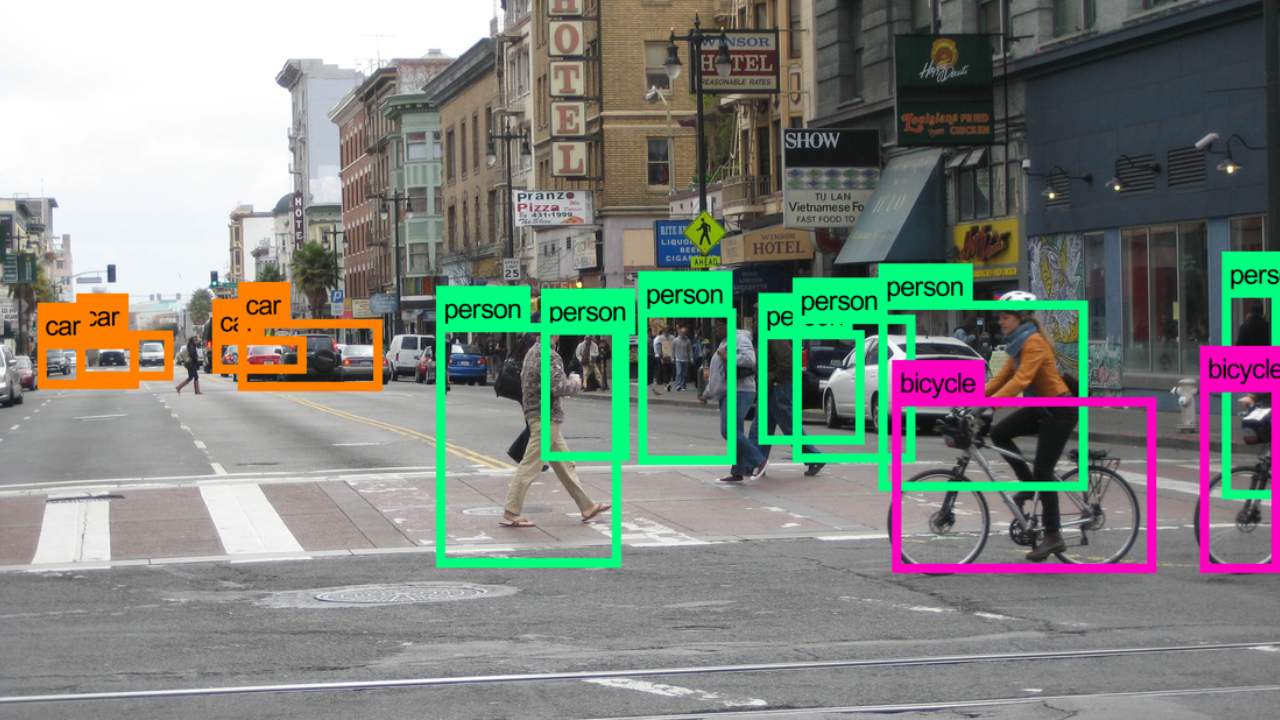
- Autonomous Driving: The automotive industry is heavily investing in CNN technology to bolster autonomous vehicle systems. Companies like Tesla employ CNNs to recognize a plethora of road signs, traffic lights, pedestrians, and other vehicles. The capacity of CNNs to process and learn from real-time data is critical for the safe navigation of self-driving cars, directly impacting road safety and efficiency.
Looking Ahead
The evolution of Convolutional Neural Networks is an ongoing journey. As we continue to refine these technologies and deepen our understanding of their capabilities, exciting trends are emerging. From the integration of CNNs in augmented reality applications to advancements in transfer learning that allows for more efficient model adaptation across different domains, the future of computer vision looks promising. As we venture deeper into the realm of AI and machine learning, the possibilities of CNN technology are limitless, encouraging further exploration and innovation.
Buckle up as we dive deeper into this compelling technology and uncover the endless opportunities it presents in shaping our future!
DIVE DEEPER: Click here to uncover more insights
Unpacking the Mechanics of CNNs
To truly appreciate the impact of Convolutional Neural Networks (CNNs) on computer vision, it’s essential to delve into the mechanics that make these networks so effective. Their architecture consists of a series of layers that sequentially process the input data, drawing an intricate map of the visual world before producing a final output. This allows CNNs to achieve remarkable feats in image analysis and recognition.
The Architecture Behind CNNs
A CNN comprises several key layers that collaborate to extract features from images. Understanding these layers is crucial for grasping how CNNs revolutionize visual processing:
- Convolutional Layer: The backbone of a CNN, the convolutional layer applies a number of filters to the input image. Each filter scans the image to identify specific features. For instance, some filters may focus on detecting horizontal lines while others identify textures. The result is a convolutional map that highlights these features, forming the basis for further analysis.
- Activation Function: After convolution, an activation function—often the Rectified Linear Unit (ReLU)—is employed. This function introduces non-linearity by transforming negative values into zero, allowing the network to learn complex patterns. The activation layer serves as a threshold, ensuring that only the most relevant features are passed to subsequent layers.
- Pooling Layer: To reduce the dimensionality of the data, pooling layers are introduced. These layers downsample the feature maps, retaining the most prominent aspects while discarding extraneous details. This not only enhances computational efficiency but also aids in making the network more invariant to slight transformations in the input image.
- Fully Connected Layer: At the network’s conclusion, fully connected layers aggregate the learned features and perform the final classification. Here, the complex hierarchical information processed through the previous layers comes together, allowing the CNN to output a prediction—be it identifying a cat in a photo or recognizing a handwritten digit.
The Data-Driven Approach
One of the most defining features of CNNs is their data-driven learning mechanism. Unlike older computer vision techniques that relied heavily on manually crafted features, CNNs automatically discover the relevant features during training. This comprehensive learning process is powered by large labelled datasets, which allow CNNs to adjust their internal weights and biases using a technique known as backpropagation.
The importance of data cannot be overstated; the more diverse and extensive the dataset, the better the CNN can learn to generalize from the training images to new, unseen images. For instance, when trained on thousands of labeled images, a CNN can effectively discern not just between categories such as “dog” and “cat” but also learn detailed attributes like breed or color variations, which enhances its predictive power.
In recent years, the availability of large image datasets, coupled with advancements in computing power, has dramatically boosted the capabilities of CNNs. Platforms like ImageNet have provided a vast pool of images that has fostered a competitive environment for CNN-based algorithms, fueling continuous improvements in accuracy and performance.
As we unravel the intricacies of CNN technologies, it becomes evident that their architecture and sophisticated learning mechanisms lay the foundation for the groundbreaking advancements in computer vision we witness today.
| Advantages | Description |
|---|---|
| High Accuracy | Convolutional Neural Networks (CNNs) offer exceptional accuracy in image recognition tasks, surpassing traditional methods. |
| Feature Extraction | CNNs automatically learn and extract relevant features from images, reducing the need for manual feature engineering. |
| Scalability | CNNs can easily scale to handle large datasets, making them ideal for applications in industries such as healthcare and autonomous driving. |
| Robustness | These networks are highly robust to variations in image data, such as lighting changes or occlusions, enhancing their real-world applicability. |
In the realm of computer vision, the impact of Convolutional Neural Networks cannot be overstated. With their advanced learning capabilities, CNNs have redefined how machines interpret visual data, proving invaluable in numerous applications. From identifying diseases in medical imaging to enabling facial recognition technologies, the revolutionizing power of CNNs continues to expand the horizons of what is possible in visual data processing. By streamlining processes that once took time and expertise, CNNs empower businesses and researchers alike to unlock new possibilities in innovation and automation. In exploring the many benefits and groundbreaking applications of these networks, one delves deeper into the fascinating fusion of technology and creativity driving the future of computer vision.
EXPLORE MORE: Click here to delve into the ethics of AI text generation
Real-World Applications of CNNs
The versatility and power of Convolutional Neural Networks (CNNs) have led to transformative applications across various industries. As these networks master the intricacies of visual information, their capabilities extend beyond mere image classification to embrace a plethora of tasks in real-world scenarios.
Medical Imaging
One of the most profound impacts of CNNs can be observed in the field of healthcare, particularly in medical imaging. CNNs have proven to be invaluable in assisting radiologists in diagnosing diseases through the analysis of X-rays, MRIs, and CT scans. By training on vast datasets of annotated medical images, CNNs can detect anomalies such as tumors or fractures with astonishing accuracy.
For instance, a study showcased that a CNN model could outperform human experts in identifying certain types of skin cancer from dermatoscopic images. Such breakthroughs are not only enhancing diagnostic reliability but are also paving the way for earlier detection, ultimately saving lives.
Autonomous Vehicles
The automotive industry has also harnessed the power of CNNs to drive advancements in autonomous vehicle technology. Through the use of CNNs, self-driving cars are capable of interpreting visual inputs from their surroundings, which is crucial for navigating safely. The CNNs process images from various cameras mounted on vehicles to identify obstacles, road signs, and lane markings.
Companies like Tesla, Waymo, and others are leveraging CNNs for their advanced driver-assistance systems (ADAS), making strides toward full automation. This process not only encompasses image recognition, but also enables the vehicles to understand complex scenarios, contributing to the enhancement of road safety and reduction of traffic incidents.
Facial Recognition Systems
Another transformative application is seen in facial recognition technology, which has gained traction in security and surveillance. CNNs are employed to analyze facial features and recognize individuals with high precision. This technology is now integrated into smartphones for secure authentication and is widely used for identification in public spaces, such as airports and shopping malls.
Despite the benefits of convenience and security, the deployment of facial recognition systems has spurred ongoing debates regarding privacy and ethical implications. The conversation highlights the need for a balanced approach that leverages technological advancements while also addressing societal concerns.
Art and Creative Industries
Interestingly, CNNs are also making waves in the art and creative industries. Tools powered by CNNs enable artists to generate unique artworks by applying style transfer techniques, where the essence of one image is mirrored in another. Major art platforms are utilizing these technologies to facilitate creative processes, providing new avenues for artistic expression.
In addition, CNNs are deployed in generating photorealistic images, aiding professionals in fields such as architecture and product design. The ability to simulate environments and products has enhanced visualization processes and democratized access to high-quality visual tools.
As CNNs continue to evolve, their applications span an ever-broadening spectrum, reshaping how industries interact with visual information. With ongoing research and advancements in neural networks, the future promises even more innovative uses that could redefine our understanding of computer vision.
DON’T MISS: Click here to dive deeper
Conclusion: The Future of CNNs in Computer Vision
As we stand at the forefront of technological advancements, Convolutional Neural Networks (CNNs) are undeniably revolutionizing the realm of computer vision. This innovative architecture has transcended traditional image processing, proving to be a powerhouse across various sectors, from medical imaging to autonomous vehicles, and even the creative industries. The ability of CNNs to learn from and interpret vast amounts of visual data is opening doors to applications once deemed impossible.
The implications of CNNs extend far beyond simple image recognition; they are facilitating significant improvements in diagnostics, enhancing public safety, and even reshaping artistic expression. However, with these advancements come critical discussions surrounding the ethical use of technology, particularly in areas like facial recognition and data privacy. The challenge lies in harnessing this incredible capability responsibly while addressing societal concerns.
Looking ahead, the future of CNNs appears promising. Continued research and algorithmic improvements will likely yield even more sophisticated models capable of deeper understanding and nuanced interpretation of complex visual information. As industries increasingly adopt these technologies, we can anticipate groundbreaking innovations that could redefine how we interact with the visual world.
In summary, while Convolutional Neural Networks are reshaping the landscape of computer vision, they also inspire us to think critically about the ethical ramifications of our technological evolution. The journey is just beginning, and the potential is vast—an exciting invitation for researchers, developers, and businesses alike to explore uncharted territories and contribute to a future where vision and innovation coalesce seamlessly.


 Linda Carter