
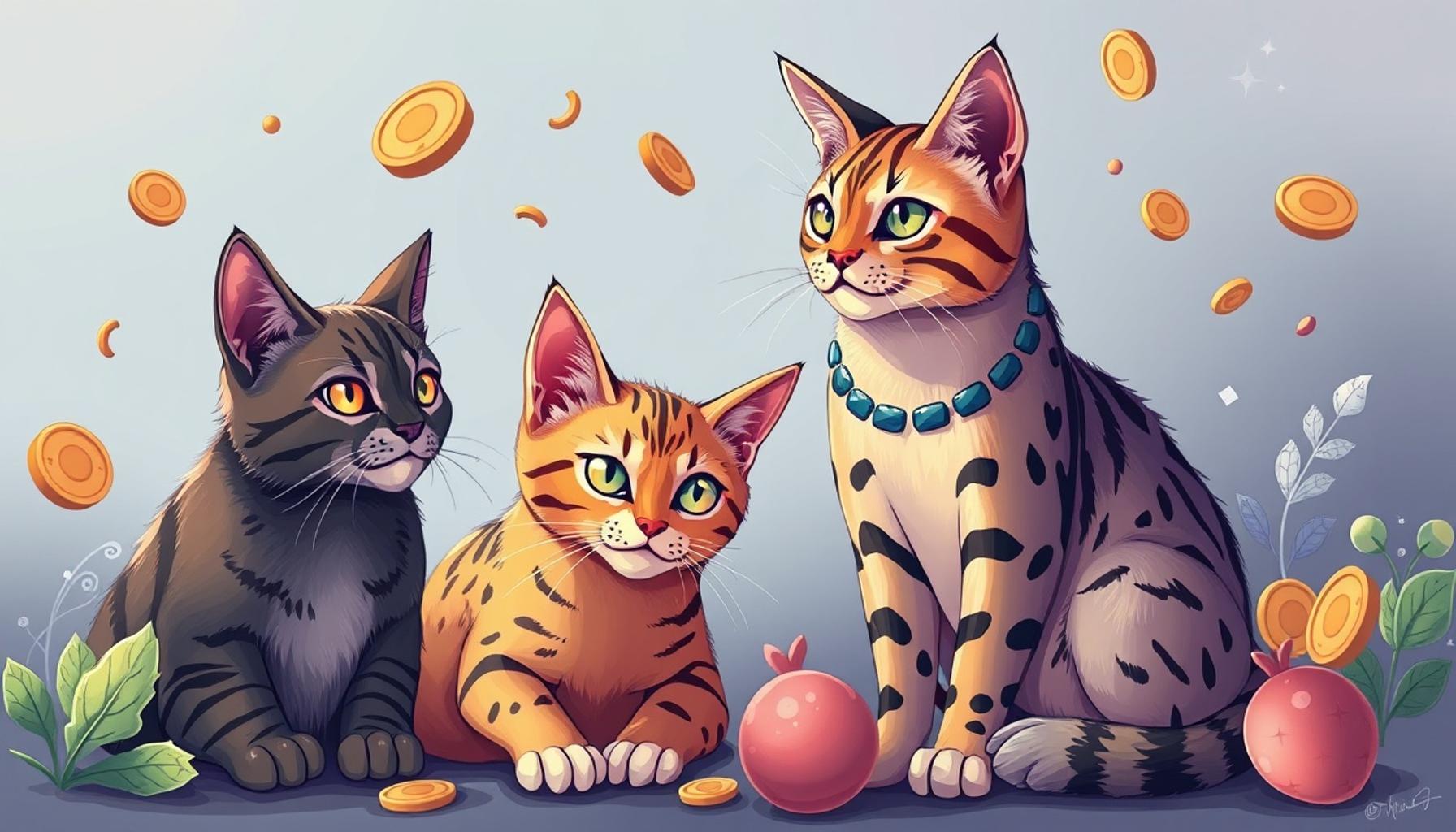
The Fascinating World of Feline Hunting Instincts
The remarkable prowess of cats as hunters is a subject of intrigue for many, enhancing our appreciation for these incredible creatures. Beyond their domesticity and adorable antics, the hunting behavior of cats is a testament to their evolutionary development, showcasing skills honed over thousands of years in the wild. Recognizing these traits not only fosters a deeper understanding of their nature but also strengthens the bond between cats and their human guardians.
One of the most striking attributes of cats is their stealthy movements. Unlike many animals that may make noise as they traverse their environment, cats excel in moving with an almost supernatural quietness. This skill is an evolutionary adaptation that allows them to stalk their prey without alarming them. For instance, a cat will often appear to glide rather than walk, using their retractable claws for balance and agile foot placement to avoid detection.
Equally impressive are their sharp senses. Cats possess exceptional night vision due to a higher number of rod cells in their retinas, making them adept at seeing in low light conditions—around six times better than humans. Their hearing is also finely tuned; they can detect ultrasonic sounds that are inaudible to the human ear, which is particularly useful when hunting small rodents. This remarkable sensory capability allows them to pinpoint the location of their prey with astounding accuracy, significantly enhancing their hunting success.
A cat’s quick reflexes are another vital component of their hunting arsenal. With powerful hind leg muscles, cats can leap up to six times their body length in a single bound, enabling them to strike with precision when the moment is right. This agility is often on full display during playtime, where cats engage in mock hunts, pouncing on toys or even on imaginary prey. Such playful behavior reflects their instinctual need to hone their skills while also providing them with physical exercise.
Moreover, a cat’s play behavior and social interactions offer significant insights into their instinctual nature. Kittens learn essential hunting techniques from their mothers and siblings when they engage in stalk-and-pounce games, which not only prepare them for real-life scenarios but also foster camaraderie among them. Observing these interactions, especially in households with multiple pets, reveals the complex dynamics at play that mirror their wild ancestors.
In conclusion, the multifaceted hunting instincts of cats represent a fascinating intersection of biology and behavior, shaped by their evolutionary journey. By understanding these natural attributes, cat owners can create an enriching environment that caters to their feline friends’ innate instincts. Incorporating interactive toys, climbing structures, and playtime into your cat’s routine can mimic the challenges they would face in the wild, promoting both physical and mental well-being. Embracing the cat’s role as a natural hunter transforms our relationship with them into one of mutual respect and deeper connection.
DIVE DEEPER: Click here to learn more
Unraveling the Anatomy of a Hunter
At the core of a cat’s hunting success lies a captivating blend of physiological adaptations and instinctive behaviors that have evolved over millennia. Every aspect of a cat’s anatomy plays a role in refining their ability to hunt, and these features stand up to the test of natural selection. Let’s explore some of the most critical components that contribute to their effectiveness as hunters.
The Power of Physical Adaptations
The physical structure of cats is meticulously designed for hunting. Their muscular build is not only sleek but also incredibly efficient for rapid movements. The anatomy of their forelimbs showcases the extraordinary strength and flexibility that enables them to pounce with precision. Their bones are lightweight yet strong, providing the right balance and support for both stealthy stalking and vigorous chases.
One of the most distinguishing features is their whiskers. These sensitive tactile hairs, or vibrissae, serve as sophisticated sensory tools, allowing cats to gauge the width of spaces and monitor their surroundings. As they navigate through the shadows of their habitat, these whiskers help them to detect even the slightest movements around them. This capability is crucial for a nocturnal hunter, where every sound and movement can reveal the presence of prey.
The Role of Instincts in Hunting
While physical adaptations provide the tools necessary for hunting, instincts play an equally vital role in guiding a cat’s behavior. For cats, the drive to hunt is deeply ingrained in their genetic makeup. This instinct is so powerful that even well-fed domestic cats often engage in hunting-related activities, whether it’s stalking a feather toy or chasing after a laser pointer. Understanding these instincts is essential for fostering a fulfilling environment for your feline companion.
- Stalking: Cats often approach their prey in a low, crouched position, utilizing their excellent eyesight to hone in on subtle movements.
- Pouncing: The final act of stealing in on prey involves an explosive leap, allowing for surprising speed and accuracy.
- Retrieving: Some cats may exhibit a tendency to bring “prey” back to a central location, which mimics the behaviors seen in wild species.
A cat’s hunting strategy often involves a combination of these instinctual elements, each fine-tuned to maximize their chances of success. Observing these natural behaviors in play can deepen your understanding of their instincts and how these activities enrich their lives.
As we continue to dive into the fascinating dynamics of cat hunting behavior, it becomes evident that these natural skills are not merely relics of their wild ancestors but are crucial to their happiness and engagement in the modern world. Enabling these instincts in a safe and stimulating environment enhances a cat’s quality of life, enriching their existence with activities that mirror their wild practices.
Understanding Hunting Behavior in Cats: Instincts and Adaptations
The Role of Instincts in Hunting
Cats, both domestic and wild, exhibit various instinctual behaviors that enhance their survival and hunting efficiency. Their keen senses, particularly sight and hearing, play crucial roles in recognizing and tracking prey. For example, a cat’s ability to see well in low light conditions allows it to hunt effectively during dawn and dusk, times when many of their natural prey are most active. Additionally, the specialized structure of a cat’s ear helps in pinpointing sounds even from afar, giving them a significant advantage during a hunt.In terms of behavior, the hunting process typically consists of several stages: stalking, pouncing, and catching. This well-coordinated sequence is driven by instincts that have evolved over thousands of years. In the wild, these instincts ensure that cats can effectively hunt small mammals, birds, and reptiles, all crucial for their diet. Interestingly, even well-fed domestic cats often exhibit these same hunting behaviors, a testament to the deep-rooted nature of these instincts.
Adaptations for Efficient Hunting
Beyond instincts, cats boast remarkable adaptations that enhance their hunting capabilities. Their retractable claws allow for silent movement when stalking prey, and their flexible bodies enable agile jumps and quick direction changes during a chase. Additionally, cats possess an acute sense of smell that aids in detecting potential prey nearby, which is fundamental in both hunting and social interactions with other cats.Moreover, cats exhibit specific adaptations based on their environment. For instance, felids in arid regions may have developed hunting strategies that utilize cover such as rocks and shadows, providing opportunities to ambush unsuspecting prey. In contrast, forest dwellers may climb trees to gain a vantage point or employ stealthy approaches on the ground.Understanding these intricate behavior patterns not only highlights the evolutionary journey of cats but also showcases their adaptability in various environments. By delving into their hunting behaviors, we not only learn about feline instincts but also gain insights into their environmental needs and the significance of maintaining natural habitats for their survival.
| Category 1 | Category 2 |
|---|---|
| Instinctive Stalking | Cats utilize a combination of stealth and patience to close in on their prey. |
| Adaptations for Agility | Their flexible spine and powerful legs enable quick pounces and agile maneuvers while hunting. |
Exploring these facets of cat behavior can foster a greater appreciation for their roles in the ecosystem and inform best practices for cat owners in providing an enriching environment that stimulates their natural instincts.
DIVE DEEPER: Click here to learn more about your dog’s anxiety</p
The Impact of Environment on Hunting Behavior
The environment in which a cat resides significantly influences its hunting behavior, providing a unique arena for their instincts and adaptations to manifest. Understanding how different settings affect these behaviors offers key insights into how we can create enriching experiences for our feline friends. From the vast wilderness to our cozy living rooms, the hunting dynamics shift considerably, ultimately shaping how a cat engages with its environment.
Natural Habitat vs. Domestic Life
In the wild, a cat’s hunting opportunities are dictated by the availability of prey and the habitat’s physical characteristics. For instance, in dense forests, cats are prone to utilize their excellent climbing abilities to ambush birds or small mammals. In contrast, open grasslands can promote extended chases, capitalizing on their speed and agility. This highlights how environmental factors shape hunting strategies unique to domesticated cats too.
In domestic settings, while the prey may often be limited to toys, insects, or even shadows, the essence of hunting remains intact. Providing a range of experiences can stimulate a cat’s natural instincts. For example, interactive toys that mimic the erratic movements of prey can captivate a cat’s attention. Using items such as feather wands or laser pointers can mimic the unpredictability of hunting, offering mental and physical stimulation. Moreover, creating vertical spaces with cat trees allows them to practice climbing and stalking behaviors akin to those exhibited in their natural habitats.
The Role of Social Interaction
Interestingly, social factors can also influence hunting behavior. When cats are kept in pairs or small groups, their hunting instincts may manifest differently. Social hunting has been documented in various feline species, where cats coordinate their efforts to hunt larger prey successfully. While domestic cats might not take down larger animals collectively, they often engage in play that simulates the cooperative efforts seen in wild counterparts. Observing such interactions can provide insight into their social dynamics and instincts.
The Effects of Age and Experience
Another essential factor in understanding hunting behavior in cats is the impact of age and experience. Kittens learn vital hunting techniques through observation and play with their mothers and siblings. This learning period is crucial in developing their inherent hunting skills. As they grow older, their proficiency improves, often leading to more refined hunting techniques. In contrast, senior cats, while possibly less agile, often rely on experience and strategy rather than speed and raw power. This demonstrates that hunting behavior in cats is not solely a product of physical capability, but also of learned knowledge and adaptive strategies.
- Environmental Enrichment: To support a cat’s hunting behavior, consider incorporating items like puzzles, scratching posts, and hidden treats that encourage exploration and mimic natural hunting conditions.
- Observation and Play: Engage with your cat through interactive play that promotes their predatory instincts while offering exercise and mental stimulation.
- Understanding Limitations: Recognize that as cats age, while they may not exhibit the same vigor, their instincts and tactics can still flourish in modified ways.
Ultimately, understanding how environmental factors, social interactions, and a cat’s lifecycle influence its hunting behavior can lead to a deeper appreciation of these fascinating animals. By leveraging this understanding, we can foster enriched and fulfilling environments that honor their instinctual nature, allowing these enchanting creatures to thrive within our homes.
DIVE DEEPER: Click here for the perfect menu ideas
Conclusion
In summary, the intriguing world of cat hunting behavior is a complex interplay of instincts, environmental factors, and social dynamics. By recognizing how various elements such as habitat, prey availability, and age influence the hunting strategies of these majestic creatures, we can foster environments that allow their innate skills to flourish. Domestic settings may lack the bountiful opportunities found in the wild, yet they still provide unique possibilities for cats to engage their predatory instincts.
Engaging our feline companions through interactive play and environmental enrichment is essential to promote their natural behaviors. Furthermore, understanding the role of social interaction in their hunting tactics opens new avenues for ensuring their psychological and emotional well-being. The journeys of young kittens discovering their capabilities through play to senior cats employing honed tactics offer a remarkable insight into the lifecycle of hunting behavior.
As we gain a deeper appreciation of the complexities surrounding cats’ hunting instincts and adaptations, we empower ourselves to create fulfilling environments that reflect their natural behavior. By observing and supporting these instincts, we not only enhance our cats’ quality of life but also celebrate the rich tapestry of their evolutionary heritage. Whether they stalk a feathered toy in the living room or engage in playful antics with their feline friends, every flick of a tail and twitch of a whisker tells a story rooted deeply in instinct. With this knowledge at our fingertips, we can ensure our cats thrive in a world designed for their unique needs.


 Beatriz